Industrial > CAE
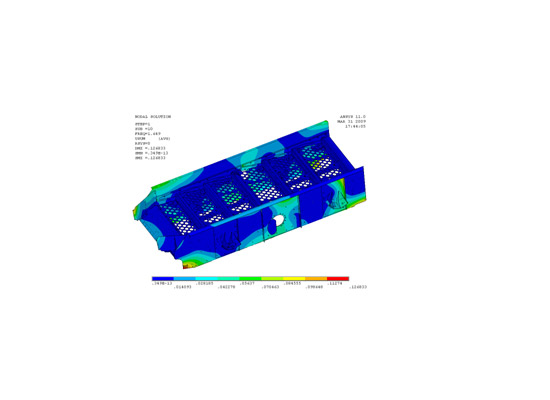
In today's world, Finite Element based methods allow designs to be virtually tested and validated before prototyping, saving large amounts of time and money. It is possible to determine the behaviour of the design and materials through a wide range of simulations from basic integrity to more complex simulations that predict the estimated life of a design.
AEDesign has extensive experience and expertise in carrying out Finite Element Analysis on designs of varying complexity levels. From meshing and setting up the model, right through to post processing and design optimisation, we can help ensure that your design functions as it is intended to.
We have the ability to carry out the following types of analyses:
- Static analysis
- Dynamic analysis
- Modal, Sine Sweep, Random Vibration
- Life Estimations (fatigue analysis)
- Non-Linear Analysis
Pre-processing
The first steps in any simulation work are essential in ensuring that the results of the simulation are reliable. These steps include, but are not limited to, mid surface generation, mesh generation, and connections modelling. For clients who are only interested in having a model that is set up and ready for simulations by their in house team, we are able to offer: crash meshing, strength meshing, and meshing for plastic and sheet metal parts. We are also able to generate mesh models for composite parts.
Static Analysis
AEDesign can simulate linear and non-linear cases as per your unique product requirements. Once the initial simulation results are compiled in report form, we are able to offer suggestions for design optimisation and improvements depending on requirements. In most cases it is possible to attain improvement in design function while at the same time achieving savings in material and production costs.
Vibration Analysis
The range of analyses that we are able to carry out include modal analysis, sine sweep analysis and random vibration analysis (PSD spectrum). These different analyses allow us to determine natural frequencies, resonance and maximum deflections experienced. Vibration can cause unexpectedly large amplitudes resulting in catastrophic failure of a structure. It can also cause a drastic reduction in service life of the structure while also leading to excess noise during operation.
Life Estimations/Fatigue Analysis
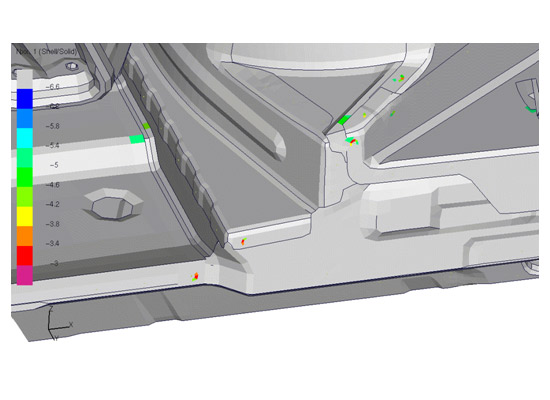
IIn order to accurately estimate the operational life of a structure exposed to cyclic loading, fatigue calculations are essential. Metallic structures are most prone to failure under repeated loads and if such a failure is not predicted, it can have catastrophic effects. Fatigue failure is manifested by cracks forming in the stressed areas of the design where flexing occurs. These cracks can then propagate resulting in failure. Through simulations we can determine the expected stress levels and then apply them over the intended life-cycle of the structure to determine whether it will have the expected life or not. We can accurately predict the areas where the failures would occur first and make appropriate recommendations.
|